Treatments
Bone Grafting
When there are times where there is insufficient bone for a dental implant or bridge, it is necessary to add additional bone to your jaw. The loss of bone from your jaw may increase over time due to gum disease, injury, dental cavities and infection. Performing a bone grafting procedure will allow for a dental implant procedure to take place.
During the specialist procedure, a small incision is made in your gum to expose the bone beneath it, then the bone graft is added. Bone for this procedure can be donated from other places such as your own body, a donated source or made from a synthetic substance. Over time, the bone graft will be absorbed by your body and replaced by your own bone.
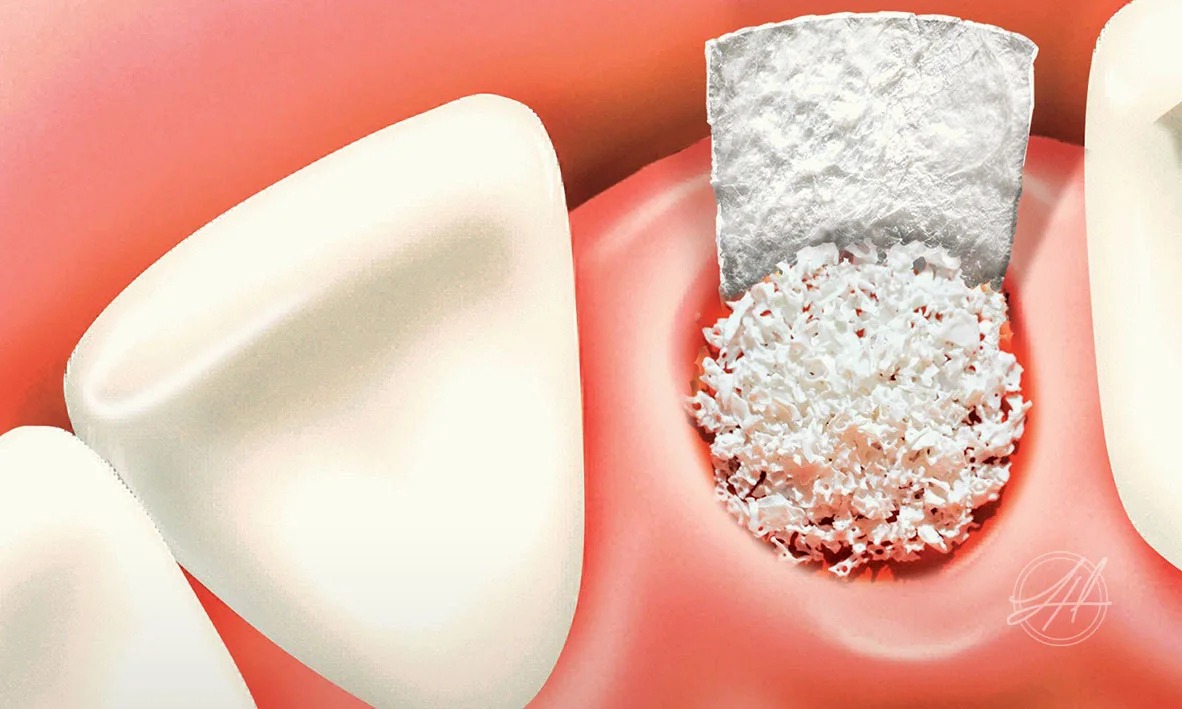
Types of Bone Grafts
AUTOGRAFT
ALLOGRAFT
XENOGRAFT
This bone grafting material comes from an animal — usually a cow. This process is completely safe for use in human bone grafts and causes no adverse responses. The materials have gone through a series of pharmaceutical treatment for preparation before reaching the surgical table.
ALLOPLAST
This type of graft uses synthetic (man-made) materials. These come in a variety of forms including, powder, granules, putty and even gel, which injected through a syringe. All materials present advantages and disadvantages in their own term, your consultation is where all the discussion in treatment of choice and treatment material of choice take place.
FAQs
Is the procedure painful?
No. During the procedure you will be under local anaesthetic and possible sedation or happy gas. This will provide favourable relief from both pain and anxiety. After the surgery, mild discomfort is controlled with conventional pain medication.
Can a bone graft fail?
It is very rare and uncommon to experience graft rejection. The success rate for bone grafts in the jaw is very high. Bone grafts are not rejected in the same way that organ transplants can be rejected.
How long does the procedure take?
Most bone grafting procedures usually take anywhere from 60 to 120 minutes.
How long is recovery following surgery?
Full recovery from the surgery takes about two weeks, off-work recommendation is for couple days up to a week. However, it is not a procedure that leaves you bed-bounded. Having said that, Dr Hui is often happy to throw in a medical certificate that spares you from helping out your partner with the dishes for a while.
How long is it until my bone regrows after surgery?
In most cases the waiting time until solid bone mass begins to appear is anywhere from 3 to 6 months.